Scorpion to Horse–November

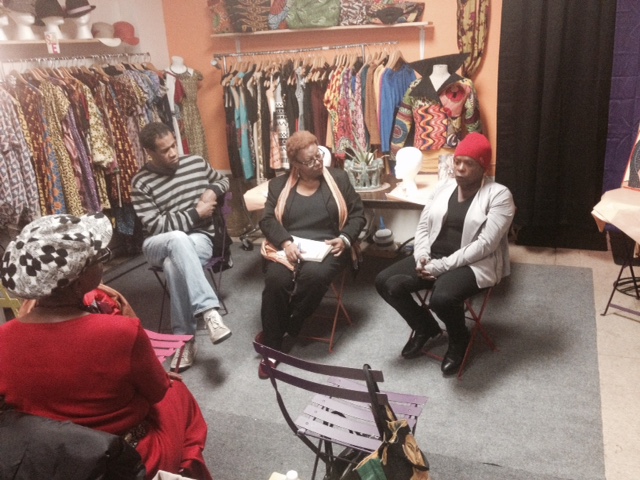
November was an amazing month.  I organized and curated a literary program at Calabar Imports  in Bed-Stuy on Tompkins Avenue, which received some local press. http://www.bkmag.com/2014/11/04/crossing-border-in-the-brooklyn-literary-scene-with-poet-patricia-spears-jones/
Q&A w/ poets

Q&A w/ poets

What was great to me was that each Sunday different voices brightened an already very colorful space.  Janice Lowe and her actor friends performed a variety of pieces that she has written words or music or both for.  Uche Nduka showcased how cosmopolitan African writers often are. Michael Broder and Rachel Levitsky called their event the “queer Jewish poets” reading.  Cheryl Boyce Taylor and Jason Schneiderman opened up about grief and writing doing the Q&A and on November 30 was simply sublime.  Alexis De Veaux and Gregory Pardlo read from their new works which are brilliant and the Q&A gave great insight into their process.  I was so pleased to do this. And so grateful for their words.


I also read with Monica De La Torre at Pace University and Charles North’s introductions for both of us was beautifully crafted.  and I really loved being a Brooklyn Poet of the Week. http://brooklynpoets.org/poet/patricia-spears-jones/. Thanks to Jason Koo, et al.  And I led a great workshop at Poets House–one of my students is a budding rapper.

All of these great things are back drop to the the awful events in the past two weeks of November–Thanksgiving was difficult for people across the U.S.  While I did not think Darren Wilson would be indicted since it was clear that the apparatus for organized to get a non-indictment. But the lack of indictment of NYPD officers for the death of Eric Garner was even more enraging.  So with that I am so thankful for the PROTESTS that started in Ferguson and have been led by young people.  And that close to 200 protests took place after the non-indictment in Missouri and the hundreds of protests around the globe after the Staten Island decision is so powerful  #BLACKLIVESMATTER as a hashtag reminds everyone that all lives matter, but when Black lives are so easily destroyed believe you mean everyone’s life is in jeopardy.  The militarized police; the corporate character of political leadership; the refusal to legislate immigration reform; the continuing destruction of public education and the recent election of the White Privilege Party aka the Republicans will make the next two years extremely challenging.  But poets have been up to the challenge. On Facebook, Artists Against Police Brutality/Cultures of Violence have been really useful stitching together many different policies, programs, events and reportage.  In the twittersphere,much is being done.

As a Black Poet, I’ve written about the live of ordinary people for years and every once in a while an ordinary person is killed in ways that should never have happened.  Michael Brown, Eric Garner, Tamir Rice, Trayvon Martin and countless other boys, men, girls and women should be breathing.  Albert Murray would have something pithy about all of this, but one thing he would most likely agree with me:  We have much to do in this nation and “trusting” the police is not one of those things.
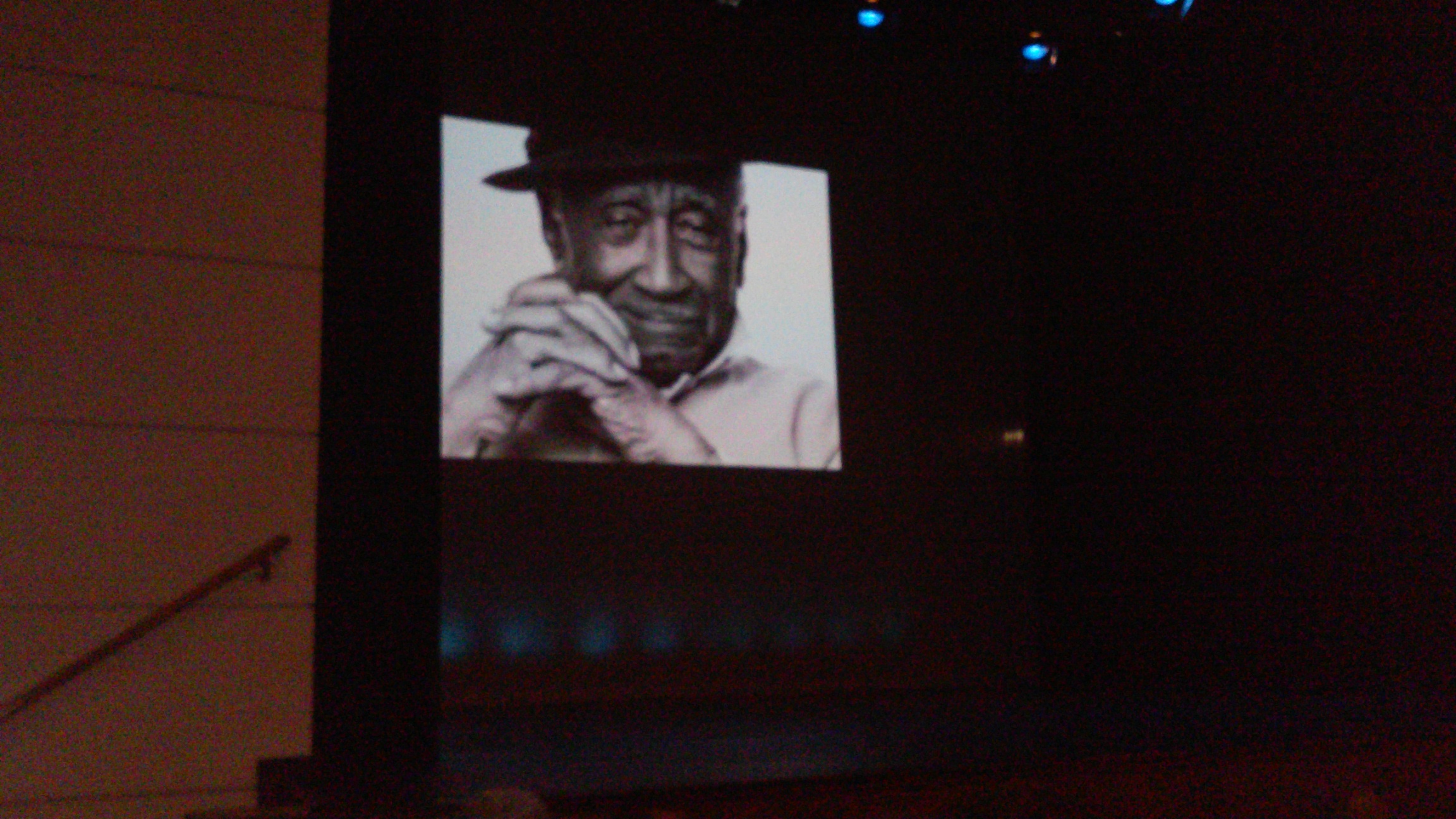
Albert Murray projected  photo by Patricia S. Jones

Albert Murray projected photo by Patricia S. Jones
Halloween weather

This is the year that I have been in places where Halloween is not about spectacle, but about the end of harvest and the beginning of winter. In Celtic Lore, All Hallows Eve is really New Year’s Eve–the old world goes/the new year comes and yes the living and the dead may speak.  Which is why Dios de los Muertos makes sense too.  There needs to be an understanding of the many worlds we move through.  Poets of course know this.  We do.  We may not always acknowledge that, but we do.   Without that intuited understanding of the many worlds we move through we would be bereft of word play.  We would not recognize the need for myths.  We would be diminished in our words and in our play.   One of my favorite uses of the mythic is Ishmael Reed’s masterful “I am a Cowboy in the Boat of Ra” http://www.poets.org/poetsorg/poem/i-am-cowboy-boat-ra

My favorite Halloween time was in the late 1970s’early 80s before AIDS and celebrity overtook the Village Halloween Parade.  In the early iteration, the parade was home made, artist organized-goofy, sexy and a true conversation between the living and the dead. When the Bread & Puppet Theater people met up in Washington Square around midnight and the hag became the maiden or was it the other way around; when drag queens wearing nurses uniforms tottered by on 5 inch heels across W. 4th St.; seeing The Royal Wedding at the corner of W. 10th & W. 4th–loved the guy as Princess Diana; when one group’s costumes were Victorian lamp shades just walking across 7th avenue South on the way to Christopher Street which post 10 pm. became a loud disco party.  Everyone was dancing, everyone was conversing with the living and the dead.   I guess the AIDS epidemic increased that conversation.  I miss many people who were stricken with the disease-smart, talented pleasure seeking men and women.  I am thankful for having known David Warrilow, Max Navarre, many others.

Now Halloween is a business, like everything else in America.  The business of costumes and how to videos and sugared and sugar free candies and fake spider webs and decorations.  I grew up with the hand made costume, the kind that make scenes in Meet me St. Louis and To Kill a Mockingbird so memorable.  Things change, not always for the better. But every year Halloween comes round. Every year a circle of the living and dead meet, dance and begin to survive winter.

Black Earth

Black Earth

Bicycle, bicycle

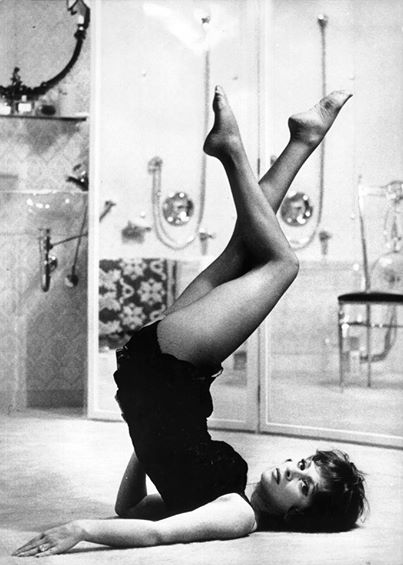
I can see my mother

Pumping her legs

A daily exercise

Thin pallet on the linoleum

Mosquitos on the other side

Of the screen door

She raises and lowers her legs

On a journey to better health?

I can see her,

See mothers  across  America

Their legs vigorously riding

Bicycles in air

Bikes with thick tires—

Sporting wire baskets

And  heavy brakes

Bicycles that said, if you pump

Hard enough, fast enough

I will take you where you need to go.


Gina Lollabridgida

Gina Lollabridgida

Harlem is a small town

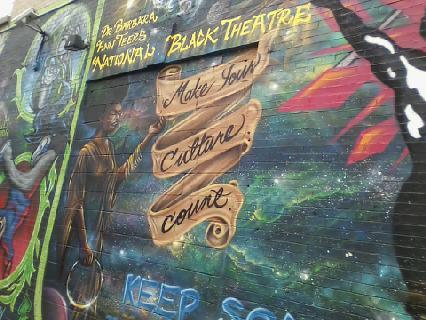
When I first came to New York City, Harlem seems a forbidding place, mostly because I lived downtown and going uptown even for 35 cents was a chore.  Most of my community, artistic and otherwise lived below 14th Street, mostly on the East Side.  But Harlem is where Black people lived, worked and in the mythology of NYC, made the Harlem Renaissance.  But that was decades ago.  And yet, artists friends took me up to the Studio Museum, which was housed in an old studio, upstairs on Fifth Avenue.  Down the street was a seriously good Latin restaurant.  The pawnshops and nail salons and cheap furniture stores that dotted 125th street looked like the pawnshops and nail salons and cheap furniture stores on 14th street.  There really is something about cross roads.

James Baldwin grew up in East Harlem.  Grew to hate it, left America, but then again, his family stayed near.  He stayed near his family.  In a very psychic way, he really never left Harlem. Paris, Turkey the world travels were ways to bring his issues to the larger world, but those issues  came from a specific place in America.  I am not sure of what he would make of 128th street where he went to school.  The well-appointed townhouses and brownstones have been spruced up. The beautiful green house across the street has one of the most perfect paint jobs I’ve ever seen.

by Patricia Spears Jnes

by Patricia Spears Jones

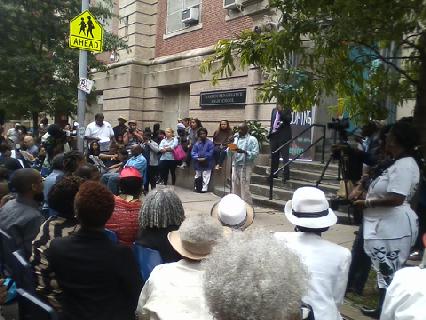
On his birthday, August 2 his family and the community that came out on an overcast Saturday afternoon to sing his praises and present a ceremony honoring the placement of a street sign on the street were glad for the cool breezes and the day’s calm.  I got there just as Sonia Sanchez was chanting Baldwin’s name.  At some point, she said that Baldwin did not receive awards for his work—but he did receive many grants, fellowships.  He would not have survived w/out that support and recognition.  I often think that we put too much on awards as if the National Book Award or a Pulitzer will assure your place in the culture.  Like on the tip of your tongue, could you tell me who won the Pulitzer Prize for fiction in say 2000? Or 1995 or 1978?  I could look these up, but is it Updike or Bellow or Morrison?  I don’t know.  I do know the work of these fine writers and I now know much more about Baldwin.

On his birthday, August 2 his family and the community that came out on an overcast Saturday afternoon to sing his praises and present a ceremony honoring the placement of a street sign on the street were glad for the cool breezes and the day’s calm.  I got there just as Sonia Sanchez was chanting Baldwin’s name.  At some point, she said that Baldwin did not receive awards for his work—but he did receive many grants, fellowships.  He would not have survived w/out that support and recognition.  I often think that we put too much on awards as if the National Book Award or a Pulitzer will assure your place in the culture.  Like on the tip of your tongue, could you tell me who won the Pulitzer Prize for fiction in say 2000? Or 1995 or 1978?  I could look these up, but is it Updike or Bellow or Morrison? I don’t know.  I do know the work of these fine writers and I now know much more about Baldwin.

by Patricia Spears Jones

by Patricia Spears Jones

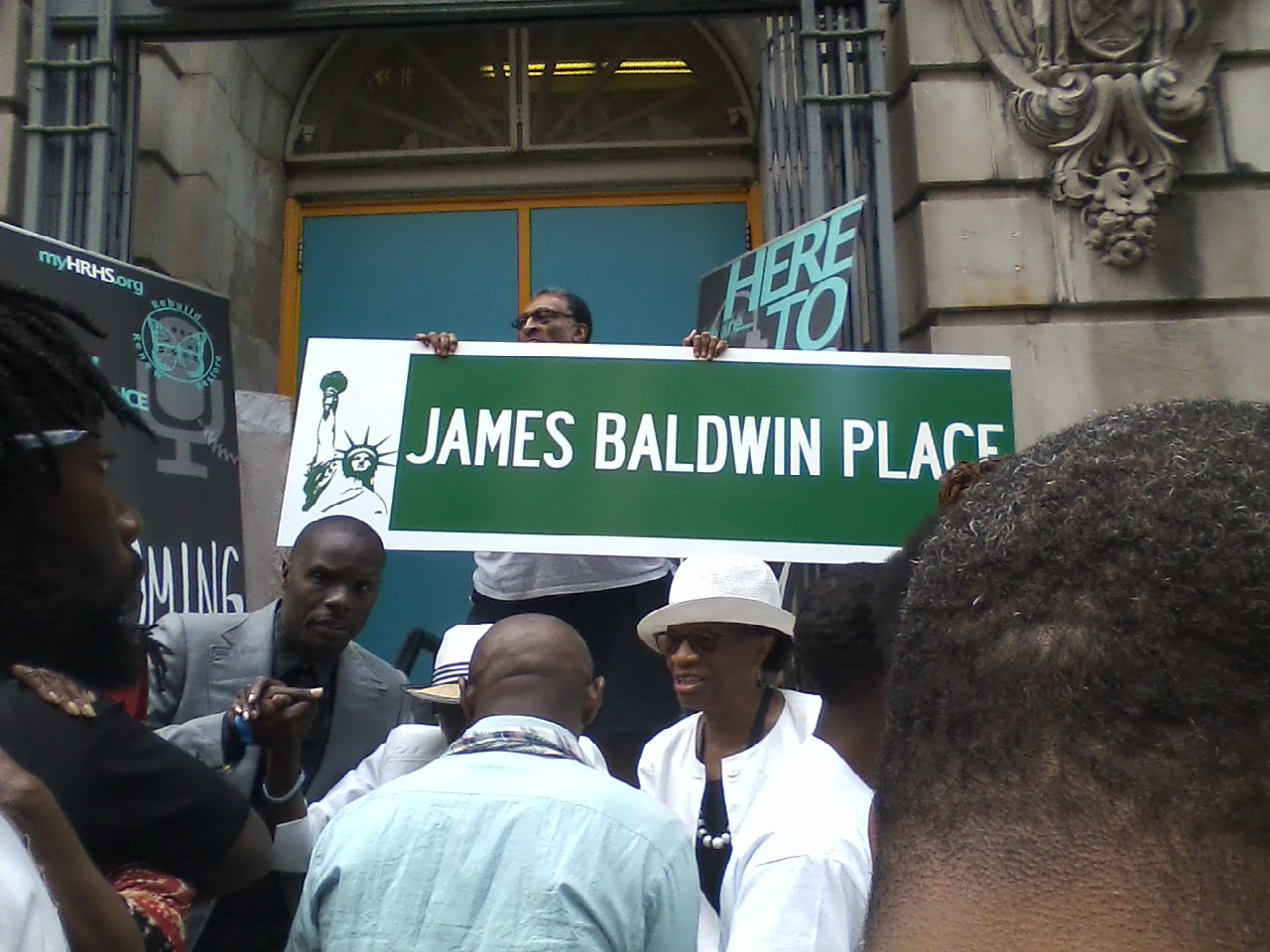
As Rich Blint pointed out the street sign will not be put up for a while the city puts up all new signs on one day.  (as if by magic) so they provide mockups that can be shown to the adoring populace.  So on Saturday, the mockup was held up for all of us to see.  It is green.  Baldwin’s name is correctly spelled. His nephew Trevor Baldwin spoke eloquently for the family in accepting this honor.  And representatives from the National Black Theater, from the school where this event took place and where Baldwin went to school were happy and proud.  Black people mostly who know the family, knew “Jimmy” care about art and culture and Black history and Black people’s lives and this slice of Harlem and its volatile history were there.   And then I got it, Harlem really is a small town.  One where people do know each other, look out for each other, worry about each other.  And who see the town slowly change as newcomers with more money come in; people who may not understand how hard won the beauty of these blocks from 125th and up was fought for against red lining, racism, neglect and countless deaths from bad drugs, bad decisions, poor diet or a life spent working 2-3 jobs so that children only had to get one.  Baldwin understood that.  His love is often cited, his ability to not the need for that.  And I think like St. Paul who in First Corinthians 13 says “For now we see through a glass darkly”—that darkness must be acknowledged. It seems to me that all of this “transparency” and “illumination” that everyone talks about covers up more than darkness does.  There is not light at the end of a tunnel of light, there is blindness.

Baldwin understand like St. Paul that “the greatest of these is charity”, but he could also say that you can only love after you recognize the rage resulting from injustice, brutality, hatred.  He aspired to and achieved greatness as a writer, thinker, human being.  We can only hope that generations hence seeing the street sign will think, I need to find out who this James Baldwin is.  I hope that there will be many books, articles, oral histories, etc. along with his essential work available to those future readers.

Baldwin street sign

by Patricia Spears Jones